
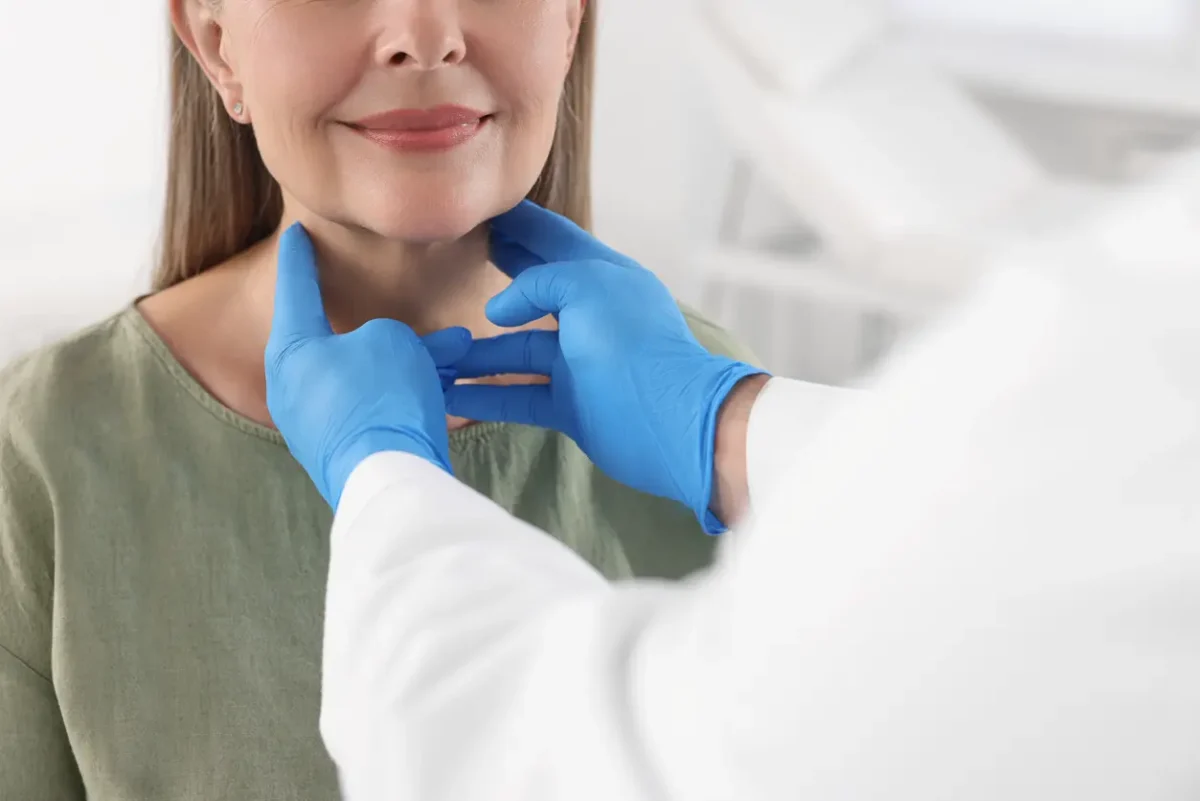
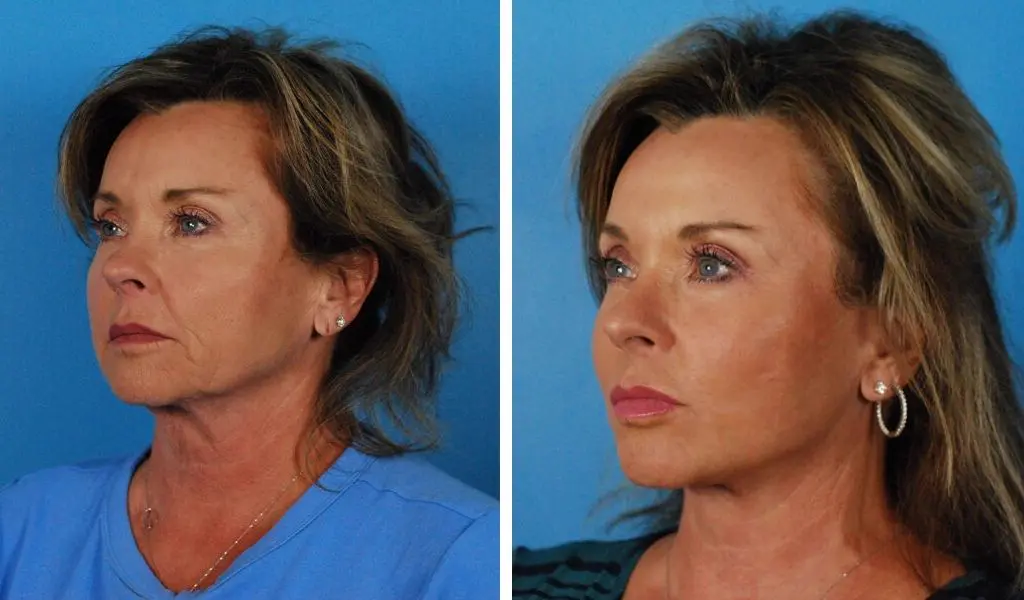
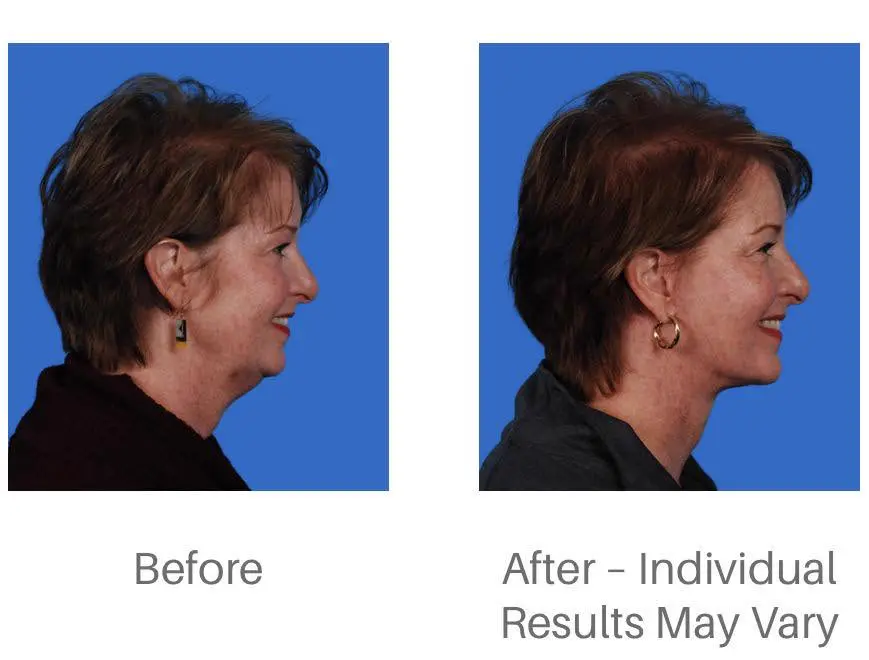
A facelift in Raleigh can address sagging skin and improve definition along the jawline and neck. However, loose skin isn’t always the only factor contributing to fullness beneath the jaw. In some patients, prominent submandibular glands can contribute to a less defined neck and jawline.
Understanding the role of the submandibular glands can help patients better understand why Dr. Adam M. Becker may recommend additional neck contouring during a facelift or neck lift.
What Are the Submandibular Glands?
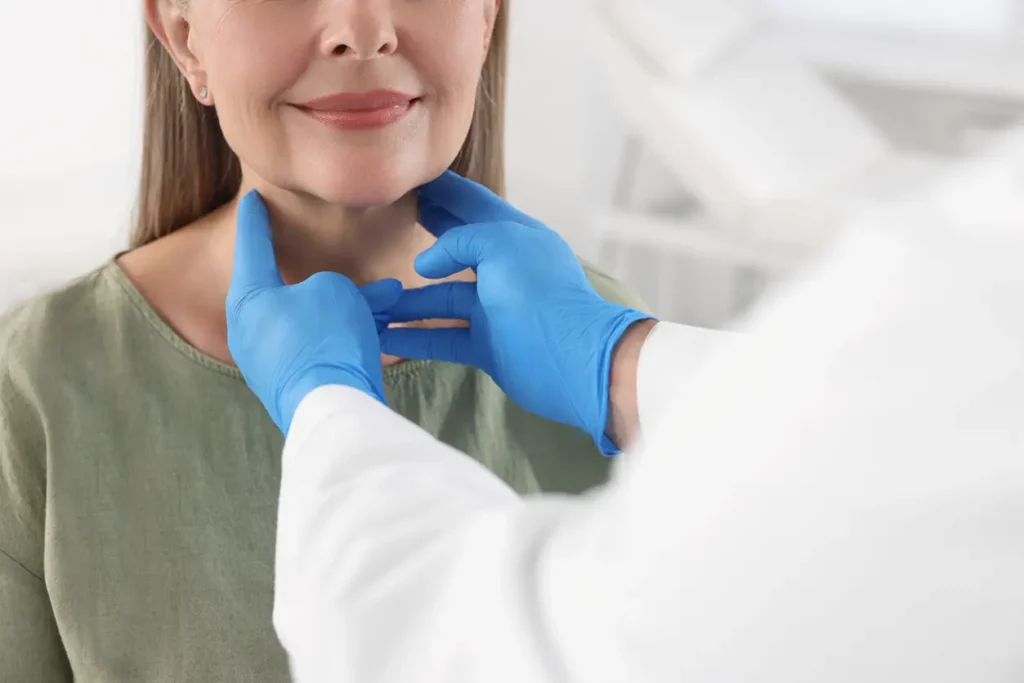
The submandibular glands are salivary glands located beneath the lower jaw, one on each side. They produce saliva and are a normal part of the body’s anatomy.
Depending on their size and position, the glands can contribute to a rounded or full appearance beneath the jawline. Because they are located deeper than the skin and tissues typically addressed during a facelift or neck lift, tightening the skin and underlying tissues alone may not completely change the contour created by prominent glands.
What Is Submandibular Gland Reduction?
Submandibular gland reduction is a surgical procedure that removes a portion of the gland to reduce its visible prominence.
For some patients undergoing a facelift and neck lift, reducing the prominence of the submandibular glands may be considered when the glands contribute significantly to fullness beneath the jaw.
It is important to understand that submandibular gland reduction is not a routine part of every facelift. Fullness beneath the jaw can have several causes, including:
- Loose or excess skin
- Excess fat
- Neck muscle anatomy
- Prominent submandibular glands
- A combination of these factors
During a facelift consultation, Dr. Becker can evaluate your individual anatomy and determine which factors may be contributing to the appearance of your jawline and neck.
Who May Be a Candidate for Submandibular Gland Reduction?
Dr. Becker may discuss submandibular gland reduction with patients whose glands are visibly prominent and whose desired neck contour may not be achievable through skin tightening, muscle treatment or fat removal alone.
Your overall health and medical history are also important considerations. For example, existing dry mouth or a salivary gland condition may affect whether this procedure is appropriate.
The goal isn’t to add procedures unnecessarily. Instead, the goal is to develop an individualized facelift and neck lift plan based on the anatomy that is actually contributing to fullness or reduced definition.
What Are the Risks?
Submandibular gland reduction involves surgery in a delicate area of the neck. As with any surgical procedure, there are potential risks and complications.
Specific considerations include:
- Bleeding
- Fluid or saliva collection or leakage
- Temporary weakness of a nerve that helps move the lower lip
- Less commonly, lasting nerve weakness
- Changes in saliva production
Dr. Becker will discuss the potential risks and benefits with you and determine whether addressing the submandibular glands is appropriate for your individual goals.
How Can Submandibular Gland Reduction Affect a Facelift Result?
A facelift can improve sagging skin and underlying tissues, but achieving a well-defined jawline and neck sometimes requires looking beyond the skin.
For patients with prominent submandibular glands, addressing their contribution to fullness may be considered as part of a comprehensive facelift and neck lift approach.
The objective is not simply to make the neck tighter. It’s to create a natural-looking transition from the face to the jawline and neck that is appropriate for the patient’s anatomy.
An Individualized Approach to Facelift Surgery in Raleigh
No two faces have exactly the same anatomy, which is why facelift surgery should be individualized to the patient rather than performed according to a one-size-fits-all approach.
During a consultation, Dr. Adam M. Becker of Triangle Facial Plastic Surgery can evaluate the different structures contributing to fullness beneath your jaw and discuss which options may be appropriate for your goals.
If you’re considering a facelift in Raleigh, NC, or are interested in improving definition along your jawline and neck, contact Triangle Facial Plastic Surgery to schedule a consultation.




 We are excited to announce that we’ve added ISDINceutics, an exclusive collection of advanced, medical grade skincare products from Spain!